
Weight gain during
Perimenopause and menopause
(Part 1)
November 16, 2026
By Adriana Posadas, PA-C, MSCP
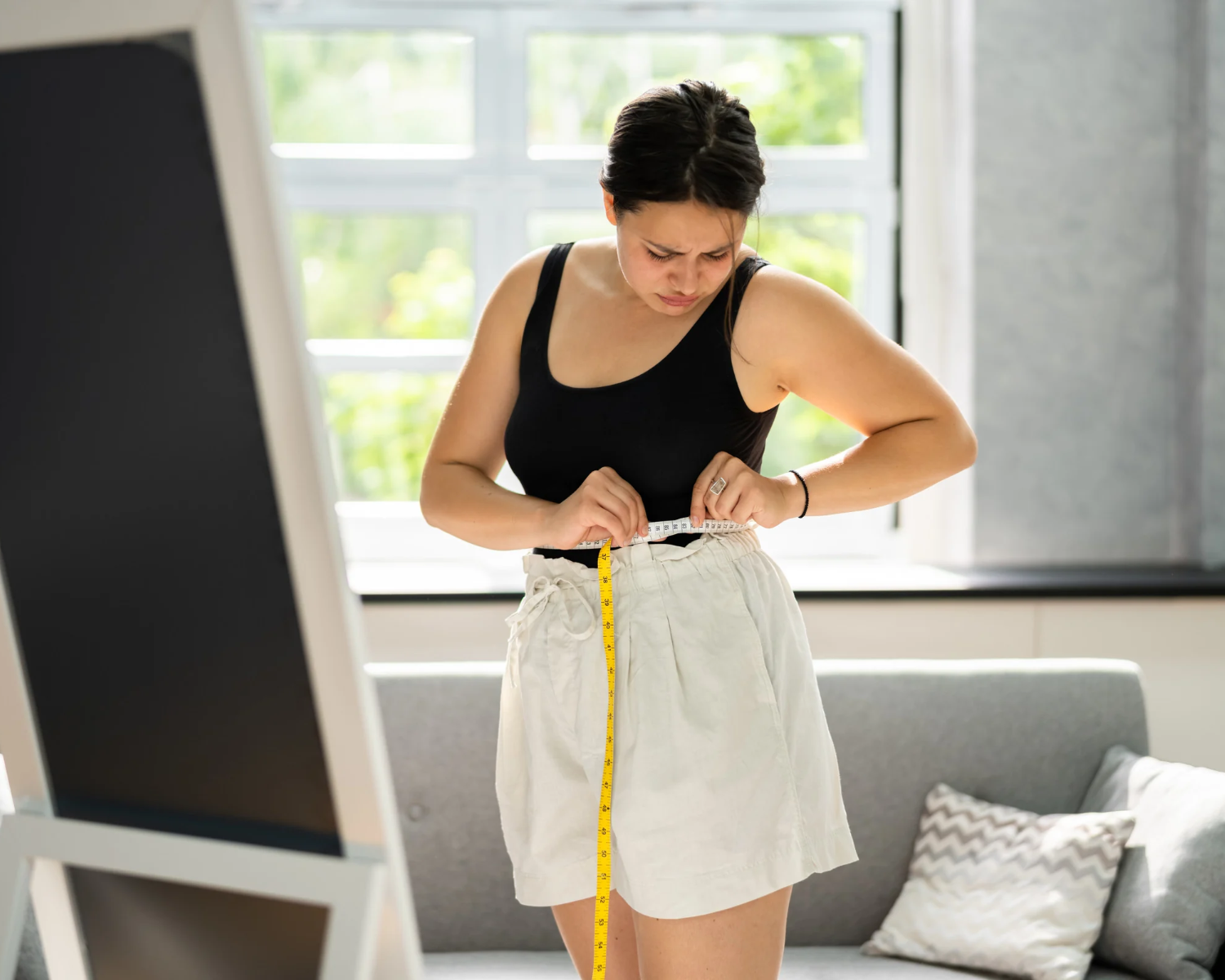
On average, women will gain 22 lbs between ages 40 and 60. Wait, what? I am sure you have noticed that, for no apparent reason, you are gaining or have gained weight in your midsection during perimenopause. My patients tell me, “I am gaining weight and I have not changed anything.”
There are several reasons for this.
The first is the decline in estrogen levels. During your reproductive years, estrogen favors the deposit of fat on your hips and thighs to prepare you for childbirth. But declining estrogen levels shift this fat accumulation from your hips to your belly, resulting in bigger waistlines.
Another reason is that we lose muscle mass with age. This loss in muscle slows down metabolism. Muscle is replaced by fat, especially visceral fat, and insulin sensitivity drops. We can develop insulin resistance after menopause.
In the SWAN study, they observed that starting about 2 years before the final menstrual period (FMP), the rate of fat gain doubled while lean mass declined, and this continued until about 2 years after the FMP. Muscle is the main site of insulin-mediated glucose uptake. What does this mean? Skeletal muscle is the largest metabolic organ; it absorbs up to 80% of the glucose (sugar) in the blood, especially after a meal, mediated by insulin. Exercise lowers glucose, even when insulin resistance is present. Muscle mass is the major determinant of total daily energy expenditure. The recommendation is to go for a walk after the biggest meal of the day. With less muscle, there is more glucose in the blood. Insulin raises and fat storage, particularly visceral fat is favored. With less muscle, we feel weak, move less, spend less energy during the day, therefore gain weight.
Inadequate sleep causes weight gain, mainly by increasing calorie intake. “You are not sleeping enough, you're tired in the morning, which can lead you to make bad decisions like not eating healthy, and because you are tired you don’t want to exercise.” We have all been there. The scientific reason is that calorie intake increases by 250-300 kcal/day, without the increase in energy expenditure. The extra eating is driven by greater hunger, heightened food reward, and weaker impulse control. Sleep also causes insulin resistance, higher evening cortisol, and the preferred visceral fat deposition.
Cortisol is known as the stress hormone. Cortisol has a very important function in fat, protein and glucose metabolism. We have receptors in our belly fat. During times of stress, cortisol is produced by the adrenal glands and this increase in cortisol stimulates the receptors in belly fat and stimulates more accumulation of fat into the fat cells. Cortisol also increases appetite for high calorie comfort foods. But this is only one of the contributors of weight gain during menopause. We do not check cortisol levels or treat “cortisol fatigue”, because there is no scientific evidence to support this. The recommendation is to treat vasomotor symptoms and insomnia with hormone optimization, stress reduction, resistance training with adequate protein intake and to limit alcohol intake.
As you can see, weight gain during perimenopause and post menopause is a very complex issue. The things you used to do before, in your reproductive years, won’t necessarily work anymore. The rules of the game have changed.
I am pretty much in favor of prevention vs treatment. I recommend my patients who are in their late 30s and early 40s to start doing resistance training to preserve their muscle mass, in preparation for the menopausal transition.
What can you do today? Start with one change. Today I started resistance training. I struggle with consistency, which is why I went with a friend for accountability.
In the next blog post, I will talk about dietary recommendations. Stay tuned!
0 comments